

Stop Staring at the Finish Line
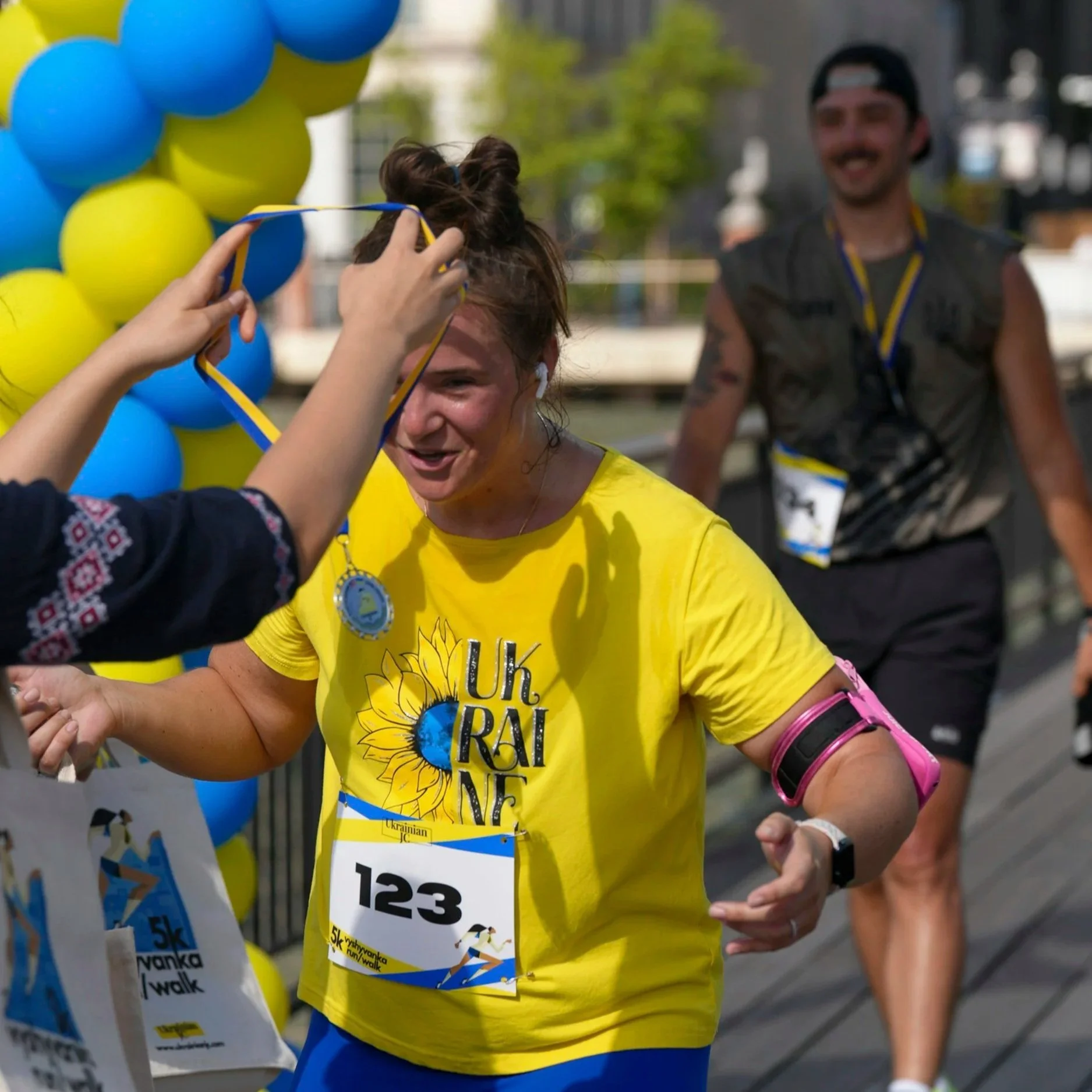
How to turn a big health goal into something small enough to actually start.
We love a big goal.
Lose 10kg.
Get fit.
Get strong.
Run 10km.
Sort out my eating.
Feel like myself again.
They're exciting to write down.
The problem comes approximately four minutes later when we think...
Right. How the hell do I actually do that?
Because "get healthy" isn't something we can do this afternoon.
Neither is "lose 10kg."
They're destinations.
And when we're standing at the very beginning staring all the way at the finish line, the distance between here and there can feel enormous.
So we plan.
We research.
We buy things.
We wait for Monday.
And sometimes we never actually begin.
There's a better way.
First: goals are useful. But they don't do the work.
James Clear makes a distinction I absolutely love:
Goals tell us where we're going.
Systems determine how we're going to get there.
Clear argues that goals are useful for setting direction, while systems—the behaviours and processes we repeatedly follow—are what actually create progress. (James Clear)
Think about it.
Two people can have exactly the same goal:
"I want to lose 10kg."
One succeeds.
One doesn't.
The goal wasn't the difference.
They both wanted the same thing.
The difference was what happened on the completely unremarkable Wednesday afternoons between setting the goal and reaching it.
That's where results live.
Not in the goal.
In the things we repeatedly do.
So keep the big goal.
I'm not going to tell you to stop setting goals.
Goals can be bloody motivating.
They give us direction.
Research in goal-setting psychology also supports making goals specific rather than vague, and breaking longer-term goals into shorter-term targets. Goals work best when they're paired with feedback and an actual strategy for achieving them. (APA Dictionary)
So dream big.
Write down the thing you genuinely want.
I want to lose 10kg.
I want to run 5km.
I want to feel strong.
I want more energy.
I want to improve my health before my next blood test.
Excellent.
Now...
Stop staring at it.
We need to work backwards.
Step 1: Ask what that goal actually requires.
Let's use:
I want to lose 10kg.
We can't wake up tomorrow and "do" losing 10kg.
But we can ask:
What behaviours would make that outcome more likely?
Perhaps:
Eat balanced, satisfying meals.
Create an appropriate calorie deficit.
Walk regularly.
Strength train.
Sleep enough.
Drink less alcohol.
Plan food before we're starving.
Great.
We've just moved from an outcome to a collection of behaviours.
Now we can work with something.
Step 2: Make it smaller. Then smaller again.
This is where I think we routinely shoot ourselves in the foot.
We get excited and decide:
Right!
I'll strength train three times a week.
Walk 10,000 steps every day.
Meal prep Sunday.
Track everything.
No takeaway.
No alcohol.
Bed by 9:30.
Starting Monday.
That's not a starting point.
That's an entire lifestyle renovation.
And when we inevitably can't maintain all of it, we decide:
"See? I can't stick to anything."
No.
We simply started too big.
Clear's work on habit formation repeatedly comes back to making a new behaviour easy enough to begin and building from there. His practical framework asks how we can make a desired habit obvious, attractive, easy and satisfying. (James Clear)
So let's shrink it.
Big goal: Lose 10kg.
↓
Behaviour: Move more.
↓
This week: Walk three times.
↓
Today: Put my shoes on and walk for ten minutes after dinner.
There.
Now we have something we can actually do.
Tiny doesn't mean pointless.
This can be surprisingly difficult to accept.
We want the action to feel substantial enough to "count."
A ten-minute walk?
Surely that's not going to change anything.
One balanced breakfast?
What's the point?
One strength session?
Hardly transformational.
But we're judging the first action by the wrong measure.
Its job isn't to transform our body today.
Its job is to get us moving.
Because ten minutes can become fifteen.
One strength session can become two.
One decent breakfast can become our normal breakfast.
Small actions repeated become patterns.
Patterns become habits.
Habits accumulate.
And suddenly the tiny thing that seemed almost laughably easy has become part of how we live.
That's the power of small.
Step 3: Tell the habit where to live.
This is where the science gets particularly useful.
Researchers call it an implementation intention.
Instead of:
"I'll exercise more this week."
we decide:
When. Where. What.
For example:
"On Tuesday at 6pm, I'll walk for 20 minutes around my neighbourhood."
In a well-known exercise study discussed by Clear, participants who specified exactly when and where they planned to exercise followed through substantially more often than participants who were simply given motivational information. The broader research on implementation intentions similarly finds that linking a situation to a planned response can improve goal attainment. (James Clear)
This is wonderfully boring.
No vision board.
No motivational speech.
No waiting until we feel inspired.
Just:
Tuesday. 6pm. Shoes on. Go.
Clarity beats hype.
Step 4: Make the first version embarrassingly achievable.
Ask:
What's the smallest version of this I could still do on a crappy week?
That's the habit I want.
Not the version of us who slept beautifully, has no meetings and woke up inexplicably enthusiastic about life.
The real version.
Busy.
Kids need something.
Work ran late.
Didn't sleep brilliantly.
Can't be bothered.
Can that person still do it?
If an hour-long workout feels impossible...
Do twenty minutes.
If cooking seven dinners feels overwhelming...
Plan three.
If 10,000 steps feels miles away...
Add a ten-minute walk.
If changing your entire breakfast feels too much...
Add a source of protein to what you're already eating.
Make success easier to achieve.
Then achieve it.
Then build.
Step 5: Put the action in front of the result.
This is the part I really want us to get good at.
If our goal is fat loss, the scales are going to move around.
If our goal is strength, we're not going to notice dramatic changes after three sessions.
If our goal is better health, we might not see changes happening inside our body at all.
So if results are our only reward, we're going to spend a lot of time feeling like nothing is happening.
Instead, measure the thing we control.
Not:
"Did I lose weight this week?"
But:
"Did I complete my three walks?"
Not:
"Do I look stronger?"
But:
"Did I do my two strength sessions?"
Not:
"Do I feel completely different?"
But:
"Did I eat a proper lunch four days this week?"
That's progress we can see immediately.
And there's something psychologically powerful about being able to say:
I said I would do that. And I did.
Step 6: Let small wins change the story we tell about ourselves.
This is one of my favourite ideas from Atomic Habits.
Clear describes behaviour change at three levels: outcomes, processes and identity. Rather than only chasing an outcome, repeated actions can provide evidence for the kind of person we're becoming. (James Clear)
Instead of:
"I want to exercise regularly."
we gradually begin thinking:
"I'm someone who moves."
Instead of:
"I'm trying to eat better."
eventually:
"I look after myself with food."
Instead of:
"I'm hopeless at sticking to things."
we start collecting evidence that says:
Actually... I follow through.
That last one matters.
Because every achievable promise we keep is a tiny vote against the old story that we can't do this.
Step 7: Don't upgrade too quickly.
This is where enthusiasm gets us again.
We do two walks.
Feel fantastic.
Then decide we're ready for:
Five walks!
Three gym sessions!
Running!
Pilates!
Meal prep!
And possibly climbing Everest by Thursday!
Easy.
Let the habit become part of life first.
If it's working...
keep doing it.
We don't constantly need to make things harder for them to be effective.
Build when the current step starts feeling normal.
Not because we're impatient for faster results.
What happens when we miss one?
Nothing dramatic.
We continue.
One missed walk doesn't mean the plan has failed.
One takeaway doesn't require a Monday restart.
One busy week doesn't erase the habit.
We just return to the next opportunity.
This is another reason systems are so useful.
A goal can feel very pass/fail.
A system simply asks:
What's the next action?
That's a much easier question to answer.
Let's turn your goal into something you can do TODAY.
Grab the big goal you've been carrying around.
Write it down.
1. What do I want?
Be specific.
I want to feel stronger.
2. Why does it matter?
I want my body to feel capable and strong as I get older.
3. What behaviours would move me towards it?
Strength training. Enough protein. Recovery.
4. What's ONE behaviour I'll start with?
Strength training.
5. What's the smallest realistic version?
Two 20-minute sessions each week.
6. When and where will I do it?
Wednesday at 6pm at home.
Sunday at 9am at home.
7. What's my first action?
Put the dumbbells out tonight.
That's it.
We've gone from:
"I need to get stronger."
which our brain can't really act on...
to:
"Tonight I'll put my dumbbells beside the mat."
We can do that.
And tomorrow, we're already one step further forward.
Your goal isn't today's job.
This might be the most important part.
If you want to lose 10kg, today's job isn't to lose 10kg.
If you want to become strong, today's job isn't to become strong.
If you want better health, today's job isn't to completely transform your health.
Today's job is today's action.
That's all.
The big goal gives us direction.
The small action gets us moving.
The system keeps us going.
And repetition does the heavy lifting.
So keep the exciting goal.
Write it somewhere.
Know why it matters.
Then stop staring at the bloody finish line.
Look down.
What's the next step?
Do that.
Then we'll worry about the one after it.
Sources & further reading
The behaviour-change ideas in this article draw particularly on James Clear's work in Atomic Habits and his writing on systems, identity-based habits, small behaviours and implementation intentions. (James Clear)
James Clear — Goals vs. Systems
James Clear — Implementation Intentions
The goal-setting principles are also consistent with Locke's goal-setting theory, which emphasises specific goals, shorter-term subgoals, feedback and a strategy for action. (APA Dictionary)
Not sure what your next step should be?
That’s exactly where I can help.
You don’t need another massive plan or a complete overhaul. We’ll work out where you are now, where you want to go, and the small, realistic actions that will actually get you there.
No trying to change everything by Monday. Just a clear plan, built around your life, and someone in your corner helping you keep moving forward.