

Apparently Everything Is Cortisol’s Fault Now… But What Does The Science Actually Say?

“High cortisol” has become one of the biggest buzz phrases in the health world lately. Social media often makes it sound like cortisol is the enemy behind every symptom imaginable weight gain, bloating, poor sleep, cravings, anxiety, fatigue and stubborn belly fat.
But cortisol itself isn’t bad. In fact, you need it to survive. The problem is when your body is exposed to stress constantly, without enough recovery, nourishment or downtime to balance it out. That’s when cortisol can stay elevated for too long and start impacting how you feel physically and mentally.
The good news? You don’t need a juice cleanse, expensive supplements or a “cortisol detox”. Your daily habits, food choices, sleep, movement and stress load have a huge influence on how your body regulates cortisol naturally.
What Is Cortisol?
Cortisol is a hormone produced by your adrenal glands in response to stress.
It’s part of your body’s built-in survival system.
Cortisol helps:
regulate blood sugar
manage inflammation
control your sleep-wake cycle
increase alertness
mobilise energy during stressful situations
Short bursts of cortisol are normal and healthy.
For example:
waking up in the morning naturally increases cortisol
exercise temporarily raises cortisol
dealing with an emergency activates cortisol
The issue isn’t cortisol itself.
The issue is chronic stress without adequate recovery.
What Chronic Stress Does To The Body
When stress becomes constant, the body starts prioritising survival over optimal function.
Research has linked chronically elevated cortisol levels with:
disrupted sleep
increased cravings for high-fat and high-sugar foods
increased abdominal fat storage
higher blood sugar levels
fatigue and burnout
impaired recovery
reduced muscle mass over time
mood disturbances and anxiety
Your body essentially stays in a heightened “go-go-go” state.
And many women are living there permanently.
Busy schedules. Work stress. Parenting. Poor sleep. Over-exercising. Under-eating. Constant notifications. Mental load. Financial stress.
The body doesn’t necessarily separate emotional stress from physical stress. It all adds to the total load.
Under-Eating Can Increase Cortisol
This is one of the biggest misconceptions in the fat loss world.
Many women trying to “get healthy” accidentally create more stress inside the body by:
skipping meals
eating tiny salads
avoiding carbs
excessively restricting calories
over-training without enough fuel
Your body interprets this as a threat.
Studies show aggressive calorie restriction can increase cortisol levels because the body perceives food scarcity as stress.
This is one reason extreme dieting often leads to:
low energy
intense cravings
irritability
poor sleep
loss of motivation
binge-restrict cycles
Sometimes eating more consistently actually helps the body feel safer and more regulated.
Blood Sugar Stability Matters More Than People Realise
Frequent blood sugar crashes can place additional stress on the body.
When blood glucose drops too low, cortisol helps raise it back up by releasing stored energy.
This means constantly running on:
coffee
sugary snacks
skipped meals
ultra-processed convenience foods
…can contribute to a rollercoaster of energy highs and crashes.
Foods that support steadier blood sugar include:
protein-rich meals
high-fibre carbohydrates
healthy fats
balanced meals eaten consistently
Examples:
eggs on grainy toast with avocado
Greek yoghurt with berries and nuts
chicken, rice and vegetables
oats with protein and chia seeds
Balanced meals help reduce dramatic blood sugar swings, which may help reduce unnecessary cortisol spikes throughout the day.
Carbohydrates Aren’t The Enemy
This one surprises people.
Very low carbohydrate diets may increase cortisol in some individuals, particularly active women.
Carbohydrates help support:
serotonin production
glycogen replenishment
nervous system regulation
sleep quality
This doesn’t mean you need to eat excessive amounts of refined carbs.
But chronically avoiding carbohydrates altogether can sometimes make women feel:
wired but tired
flat
irritable
unable to recover properly
Including quality carbohydrate sources like:
oats
rice
potatoes
fruit
wholegrain breads
legumes
…can support both energy and nervous system function.
Magnesium-Rich Foods May Help Support Stress Regulation
Magnesium plays a role in nervous system regulation, muscle relaxation and sleep quality.
Low magnesium intake has been associated with increased stress responses and poorer sleep quality in some studies.
Magnesium-rich foods include:
pumpkin seeds
almonds
spinach
dark chocolate
legumes
wholegrains
While supplements can be useful in some cases, food first is always a great foundation.
Caffeine And Cortisol
Coffee itself isn’t automatically harmful.
But relying on caffeine while under-slept, under-fed and highly stressed can amplify the “wired but exhausted” feeling many women experience.
Caffeine stimulates cortisol release temporarily.
For some people, this isn’t a problem.
But if you already feel:
anxious
shaky
exhausted
overstimulated
unable to sleep properly
…it may help to:
avoid caffeine on an empty stomach
reduce excessive intake
avoid caffeine late in the day
pair coffee with proper meals instead of using it as breakfast
Sleep Is One Of The Biggest Cortisol Regulators
Poor sleep and elevated cortisol often feed into each other.
High stress can worsen sleep, and poor sleep increases cortisol further.
Research consistently shows sleep deprivation impacts:
hunger hormones
stress hormones
blood sugar regulation
appetite
recovery
Some simple habits that may help:
consistent sleep and wake times
reducing bright screens before bed
eating enough during the day
reducing late-night stress stimulation
morning sunlight exposure
avoiding intense exercise too close to bedtime if it affects sleep
You do not need a perfect sleep routine.
But your nervous system does need opportunities to downshift.
Gentle Movement Can Lower Stress Hormones
Exercise is healthy stress.
But too much high-intensity training without recovery can add to the body’s overall stress load.
For women already exhausted and overwhelmed, more intense exercise is not always the answer.
Research shows lower-intensity movement can support stress regulation, including:
walking
Pilates
yoga
mobility work
light resistance training
Even a 10-minute walk outdoors can help regulate the nervous system and improve mood.
The goal isn’t punishment.
It’s supporting the body.
Your Nervous System Needs Safety — Not Perfection
Many women are stuck in a cycle of:
all-or-nothing dieting
guilt around food
over-exercising
constantly “starting again Monday”
never properly resting
That constant mental pressure becomes stress too.
Reducing cortisol isn’t about being “perfectly healthy”.
It’s about creating enough consistency, nourishment, rest and support for your body to stop feeling like it’s constantly fighting to keep up.
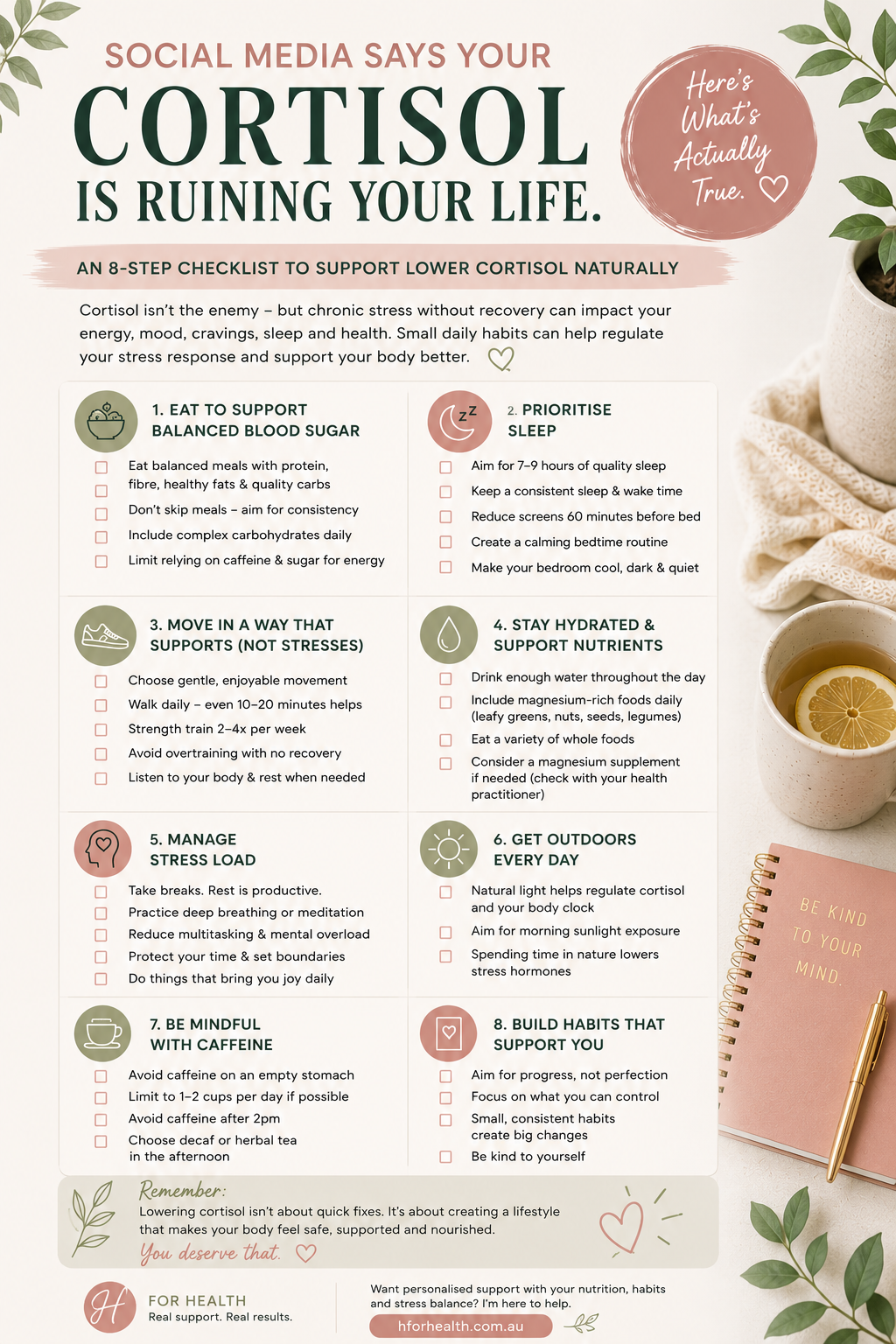
Small Habits That Can Support Lower Cortisol
You do not need to overhaul your life overnight.
Small things matter.
Habits worth focusing on:
eating balanced meals consistently
including enough protein and fibre
not skipping meals all day
reducing extreme dieting
walking daily
prioritising sleep where possible
spending time outdoors
reducing excessive caffeine
making time for enjoyment and downtime
strength training without overdoing it
building routines that actually fit your real life
Because health isn’t just about calories and workouts.
Your nervous system matters too.
Need Help Creating More Balanced Eating Habits?
If you constantly feel exhausted, stressed, stuck in a cycle of under-eating and over-snacking, or like your body is running on adrenaline and caffeine, you’re not alone.
This is exactly the kind of thing I help women work through in my nutrition coaching.
Together, we focus on realistic, balanced nutrition habits that support:
energy
mood
recovery
sustainable fat loss
blood sugar balance
better relationship with food
long-term health
No extremes. No detoxes. No perfection required.
You can learn more about my nutrition coaching through H for Health.