

Feeling Flat, Foggy Or Exhausted? Your Iron Intake Might Need Attention
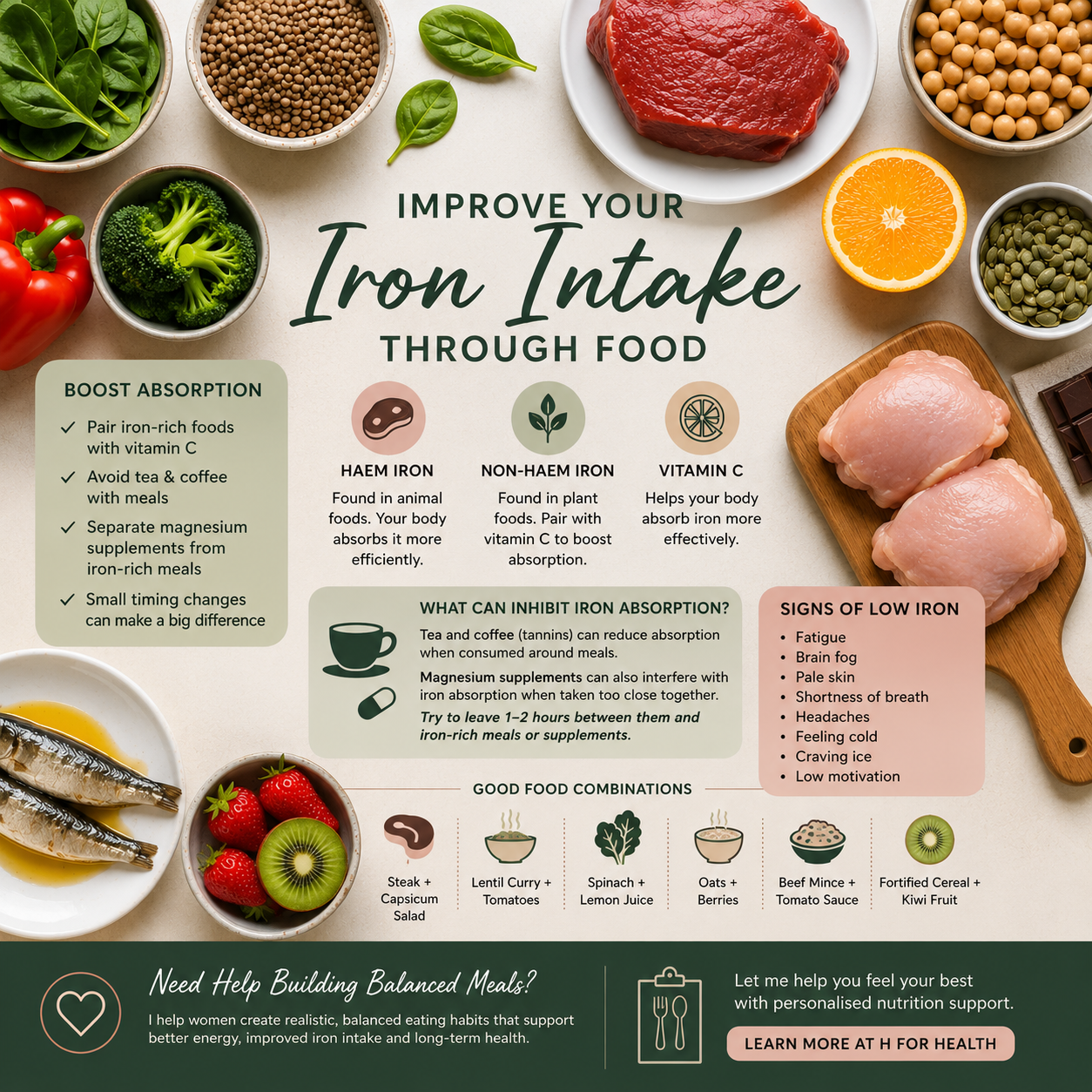
Iron is one of those nutrients most people don’t think much about… until they start feeling absolutely wrecked.
Low energy. Brain fog. Feeling puffed walking up stairs. Constant fatigue. Headaches. Struggling to recover from workouts. Craving ice. Looking pale. Feeling cold all the time.
While there can be many causes for these symptoms, low iron intake — or poor iron absorption — is incredibly common, especially in women.
And the tricky part? You can technically be eating iron without your body absorbing it properly.
The good news is there are simple ways to improve your iron intake through food and get more out of the meals you’re already eating.
What Does Iron Actually Do?
Iron helps your body make haemoglobin — the protein in red blood cells that carries oxygen around your body.
So when iron levels are low, your body struggles to transport oxygen efficiently.
That’s why low iron can make you feel:
exhausted
weak
breathless
foggy
flat
unmotivated
Your body literally has less capacity to deliver oxygen where it needs to go.
Women Are Especially At Risk
Iron deficiency is particularly common in:
women with heavy periods
pregnant women
active women and athletes
vegetarians and vegans
people who chronically under-eat
people with digestive conditions affecting absorption
And many busy women unintentionally eat very little iron-rich food because they’re skipping meals, grazing all day, dieting, or relying heavily on convenience foods.
Not All Iron Is Equal
There are two types of iron found in food:
Haem Iron
This is the type your body absorbs most easily.
Found in:
red meat
chicken thighs
sardines
tuna
shellfish
Your body absorbs haem iron much more efficiently than plant-based iron sources.
Non-Haem Iron
Found in plant foods, but harder for the body to absorb.
Found in:
spinach
lentils
chickpeas
tofu
nuts and seeds
oats
fortified cereals
These foods are still valuable — but absorption matters.
One Of The Biggest Iron Mistakes? Eating Iron Without Vitamin C
This is the game-changer most people miss. Vitamin C dramatically improves your body’s ability to absorb iron — especially plant-based iron. So instead of just eating iron-rich foods, pair them strategically.
Good combinations include:
steak + salad with capsicum
lentil curry + tomatoes
spinach + lemon juice
oats + berries
beef mince + tomato-based sauce
iron-fortified cereal + kiwi fruit
Even squeezing lemon over meals can help improve absorption.
Tea, Coffee… And Even Magnesium Can Affect Iron Absorption
This surprises people. Tea and coffee contain compounds called tannins, which can reduce iron absorption when consumed around meals.
Magnesium supplements can also interfere with iron absorption when taken too close together. This is particularly relevant at the moment because magnesium has become very popular for sleep, stress and relaxation support.
This doesn’t mean you need to stop taking magnesium or avoid coffee forever.
But if iron is a concern, it can help to:
avoid tea and coffee with meals
separate magnesium supplements from iron-rich meals or iron supplements
leave 1–2 hours between coffee/tea and iron-rich meals where possible
Small timing changes can make a surprisingly big difference.
Dieting Can Accidentally Lower Iron Intake
Many women trying to lose weight unknowingly cut out a lot of iron-rich foods.
For example:
eating tiny salads with no protein
avoiding red meat completely
skipping meals
replacing meals with snack foods
chronically under-eating
Over time, this can impact energy, training performance, recovery and mood.
Iron intake is one of the reasons aggressive dieting often backfires. Your body starts feeling terrible, energy crashes, and consistency becomes harder.
Easy Ways To Improve Iron Intake
You don’t need to completely overhaul your diet overnight. Small upgrades make a difference.
Practical ideas:
Include red meat a few times per week if you eat meat
Add lentils or beans into soups, curries and mince dishes
Pair iron-rich meals with vitamin C foods
Use iron-fortified cereals or oats
Snack on pumpkin seeds or roasted chickpeas
Add spinach to smoothies, eggs or pasta dishes
Choose higher-protein meals over random snack foods
Avoid drinking tea or coffee with meals
Separate magnesium supplements from iron-rich meals where possible
Symptoms Shouldn’t Be Ignored
If you suspect low iron, it’s important not to self-diagnose purely from symptoms. Fatigue and low energy can have many causes.
A blood test through your GP can help assess:
iron levels
ferritin (stored iron)
haemoglobin
overall iron status
Because sometimes people feel awful for months thinking they’re “just tired” when there’s an underlying deficiency contributing to it.
Food First — But Context Matters
For mild low intake, improving diet quality can make a huge difference over time. But in some cases, food alone may not be enough — especially if iron stores are already significantly depleted or losses are high. That’s why proper assessment matters. The goal isn’t just to “eat healthier”.
It’s to build meals that actually support:
energy
recovery
mood
hormones
strength
daily function
Because feeling exhausted all the time shouldn’t just be accepted as normal adult life.
Need Help Building More Balanced Meals?
If you’ve been struggling with low energy, low iron, inconsistent eating habits or you simply don’t know how to put balanced meals together, this is exactly the kind of thing I help women with.
Nutrition doesn’t need to feel overwhelming or restrictive. Sometimes small changes to meal structure, food choices and timing can make a huge difference to how you feel day to day.
Through my nutrition coaching, I help women create realistic eating habits that support:
better energy
balanced meals
improved protein and nutrient intake
sustainable fat loss
healthier relationships with food
long-term health
If you’d like support tailored to your lifestyle, routines and goals, you can learn more about my nutrition coaching through H for Health.