

High-Protein Dinners Don’t Have to Be Steak (Especially If You’re Feeding a Family)
When women hear “high protein,” they often picture:
Steak and broccoli
Chicken breast and salad
Dry tuna and rice
Or something that feels… very gym-y
And if you’re feeding a family of five? That’s getting exy.
Here’s the truth:
High-protein dinners don’t have to be meat-heavy. They don’t have to be boring. And they definitely don’t have to blow out your grocery bill. Especially if you’re vegetarian — or just trying to reduce meat.
Let’s simplify what actually works.
Why Protein Matters (Without Making It Weird)
Protein isn’t about bodybuilding.
For women 30+, it’s about:
Preserving lean muscle
Supporting metabolism
Feeling full after meals
Reducing evening snacking
Supporting hormone balance
Improving recovery from Pilates, strength training or busy mum life
Most women aren’t overeating protein.
They’re under-eating it.
And then wondering why:
They’re constantly hungry
They crave sugar at night
Fat loss feels impossible
Energy dips by 3pm
How Much Protein Do Women Actually Need?
A practical target for active women — especially 35+ — is:
~1.8g of protein per kilogram of bodyweight per day
That’s not extreme.
It’s supportive.
Let’s make that real:
75kg woman → ~135g protein per day
85kg woman → ~153g protein per day
Now before that feels overwhelming…
You’re not meant to get that from one giant dinner.
A simple way to think about it:
30–40g at breakfast
30–40g at lunch
30–40g at dinner
10–20g across snacks
And suddenly it’s achievable — without steak every night.
The key isn’t perfection.
It’s building meals around a solid protein base consistently.
What Does High-Protein Look Like If It’s Not Steak?
Instead of asking:
“What meat are we having?”
Try asking:
“What’s our protein anchor?”
For vegetarian or lower-meat families, that might be:
Eggs
Cottage cheese
Lentils
Tofu
Halloumi
Beans
Then you build the meal around that.
Examples:
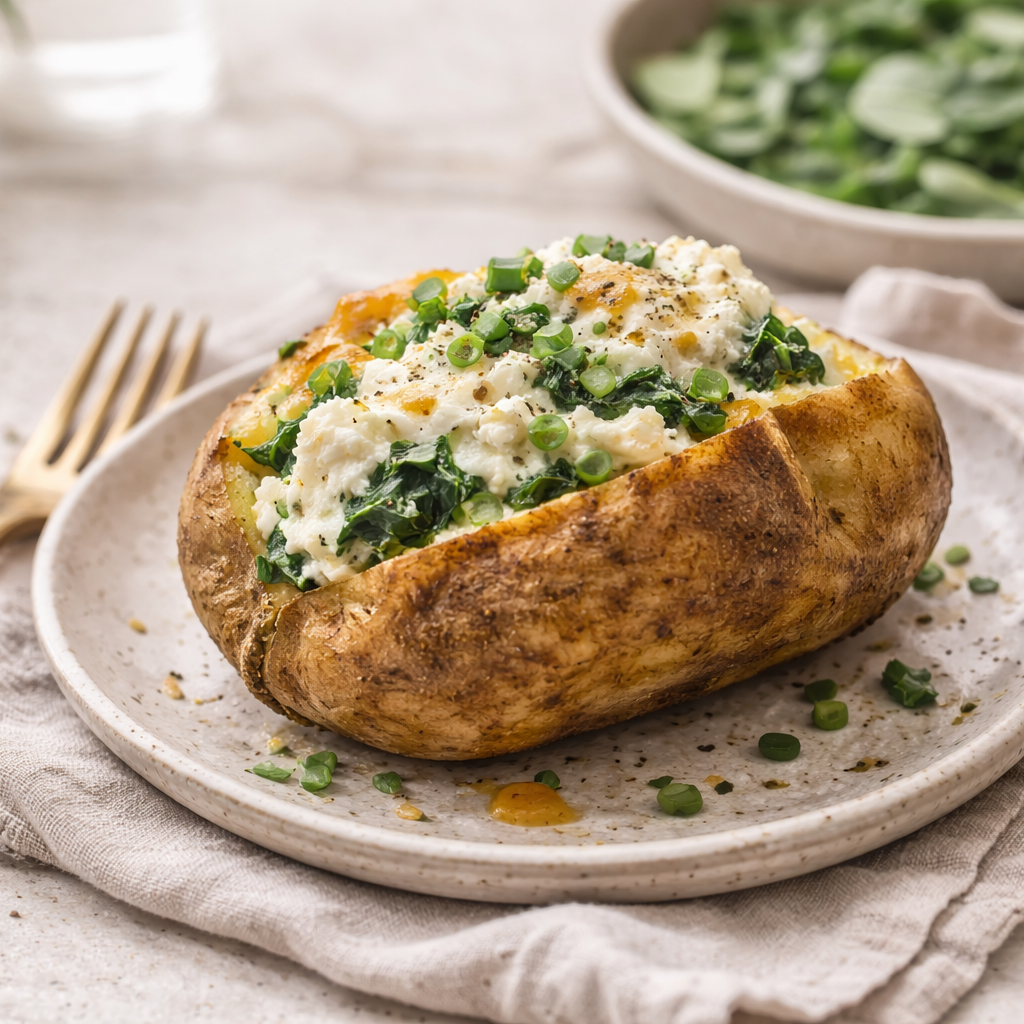
Cottage cheese & spinach stuffed potatoes
Lentil shepherd’s pie
Egg & ricotta veggie frittata
Tofu rice bowls
Halloumi & roast veg plates
Bean & cheese quesadillas
Still family friendly. Still filling. Still normal food. Just more intentional.
“But Isn’t That Expensive?”
It doesn’t have to be.
Some of the most cost-effective protein sources are vegetarian:
Eggs
Dried lentils
Tinned beans
Cottage cheese
Greek yoghurt
Tofu
The trick isn’t making separate “diet meals.”
It’s slightly adjusting what you’re already cooking.
Add:
Extra eggs to a frittata
Cottage cheese to baked potatoes
Lentils to bulk out a meal
Yoghurt on the side
Milk with dinner
Small shifts. Big difference.
Feeding a Family of 5 Without Losing Your Mind
You don’t need:
Steak every night
Protein powder in everything
Separate meals for you and the kids
Fancy ingredients
You need:
A protein-first mindset
Balanced plates
Consistency
When dinner contains enough protein:
You’re fuller
You snack less
Kids stay satisfied longer
Energy stabilises
Fat loss becomes easier (without restriction)
And that’s sustainable.
Download: High-Protein Vegetarian Dinner Ideas
I’ve created a simple, family-friendly guide with:
6 high-protein vegetarian dinners
Protein amounts listed clearly
Budget-conscious ingredients
Mild flavours for plain eaters
Easy protein boosters
No steak required.
Stick it on the fridge.
Rotate through it.
Keep it simple.
The Bigger Picture
If you followed all the internet fat-loss advice, you’d probably end up:
Restricting
Obsessing
Eating dry chicken
And feeling constantly hungry
That’s not what we’re doing here.
We’re focusing on:
Nourishment
Strength
Metabolism
Satiety
Long-term consistency
Protein-led meals aren’t about aesthetics.
They’re about feeling stable, strong and calm around food.
And no — it doesn’t always have to be steak and veg.
Ready to Make This Simple?
If you’re reading this thinking:
“I know I’m not eating enough protein…”
“I don’t want to track every gram…”
“I just want to feel full, energised and stop overthinking food…”
“I need this to work for my whole family, not just me…”
You don’t need another strict meal plan.
You need:
Clear protein targets
Balanced, realistic meals
A strategy that fits real life
Support that doesn’t revolve around restriction
Start with the guide.
(Print it. Use it. Rotate it.)
And if you’d like personalised support — where we look at your bodyweight, training, hunger levels and family life — that’s exactly what I help women with.
Because protein doesn’t need to be complicated.
And health doesn’t need to feel extreme.
It just needs to be intentional.