

Choose Your Hard — But Choose the One That Gives Something Back
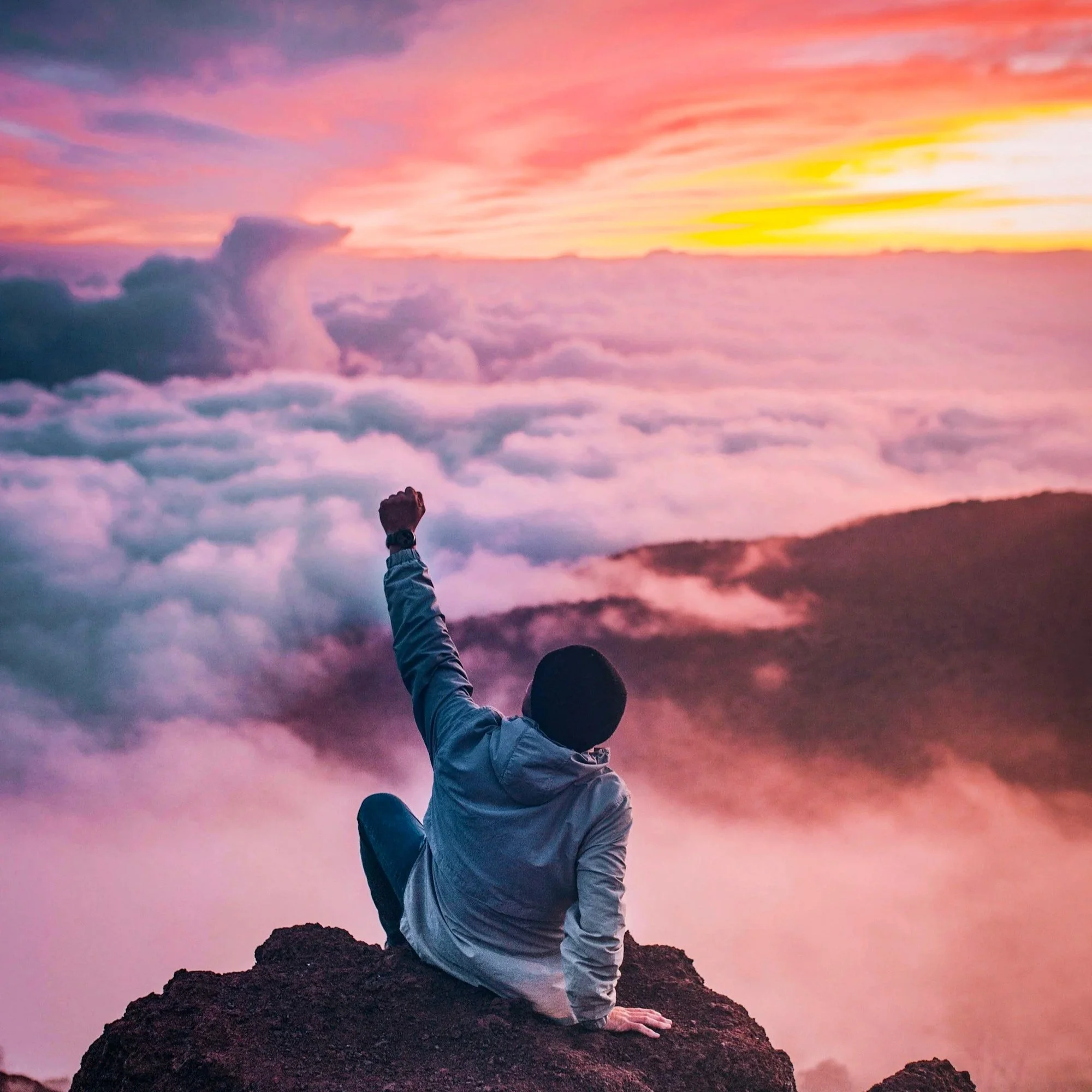
Forget living to 100 for a minute. How do you want to feel by Friday?
We talk a lot about longevity.
Strong bones when we're 70.
Muscle mass as we age.
Protecting our heart.
Reducing our risk of disease.
Keeping our brain healthy.
All incredibly important.
But sometimes 70 feels a bloody long way away.
What about Friday?
What about getting through this week without feeling like we're dragging ourselves from one obligation to the next?
What about having something left when we get home?
What about our mood, our patience, our ability to think clearly, sleep properly and actually enjoy being alive now?
Because looking after our health isn't only an investment in some distant future version of ourselves.
It changes the experience of being us this week.
And either way, the week is going to take something out of us.
So maybe the question is:
Which kind of tired do we want to be?
Both roads can be hard.
You've probably heard "choose your hard" before.
Being fit is hard. Being unfit is hard.
Eating well is hard. Feeling like crap is hard.
Blah blah blah.
There's some truth in it, but I think it's become a little too simplistic.
Because sometimes looking after ourselves is genuinely harder in the moment.
Getting out the door when we'd rather stay home takes effort.
Strength training is physically demanding.
Planning meals requires thought.
Cooking takes longer than opening a packet.
Going to bed means turning Netflix off when the episode has very rudely ended on a cliffhanger.
So yes.
Health asks something of us.
But here's the bit I think matters:
Some hard things drain us. Other hard things build us.
That's the choice.
There's tired... and then there's tired.
There's the tired we feel after moving our body.
Muscles worked.
Heart pumping.
Body pleasantly heavy.
Maybe we're a little sore tomorrow.
But underneath that tiredness, we've done something.
We've stimulated our muscles.
Challenged our heart and lungs.
Moved our joints.
Given our brain a break from whatever has been rattling around in there all day.
Maybe we've laughed with someone.
Been outside.
Done something difficult and proved to ourselves that we could.
That's one kind of tired.
Then there's the other one.
The tired where we've barely moved all day but somehow feel completely exhausted.
We've sat at a desk for eight hours.
Skipped lunch because we were busy.
Survived the afternoon on coffee.
Scrolled on our phone because our brain couldn't cope with making another decision.
Stayed up too late because we wanted a tiny bit of time to ourselves.
Woken up tired.
And repeated the whole thing.
Our muscles aren't tired because we've used them.
We're tired because everything feels heavy.
That's a very different kind of tired.
Movement costs energy. But it can also create it.
This seems completely backwards.
If we're tired, surely doing less should make us feel better?
Sometimes, absolutely.
Rest matters.
But being sedentary and being rested aren't the same thing.
Regular movement can support energy, mood, sleep, cardiovascular health, strength and mental wellbeing.
And sometimes the walk we almost didn't take is exactly the thing that makes the rest of the evening feel better.
We've probably all experienced it.
"I'm too tired to exercise."
Then somehow we drag ourselves there.
We move.
We breathe.
We sweat.
And afterwards...
We're still physically tired—but we feel better.
Our body has spent energy.
Our brain has gained something.
Food works the same way.
Eating well takes effort.
There. I said it.
Planning food takes effort.
Shopping takes effort.
Cooking takes effort.
Remembering to eat when we're busy sometimes takes effort.
But so does trying to operate a human brain that's running on coffee and half a piece of toast.
So does the 3pm crash.
So does being ravenously hungry at 6pm and eating everything we can find while we're supposedly "making dinner."
So does trying to concentrate when we haven't eaten properly.
So does spending an entire afternoon thinking about food because lunch was nowhere near enough.
Again...
Choose your hard.
One requires some effort upfront.
The other sends us the invoice later.
This isn't about squeezing more into an already full life.
This is where health advice often loses me.
We're already busy.
So telling us to:
Meal prep for three hours!
Exercise six days!
Walk 10,000 steps!
Meditate!
Stretch!
Journal!
Sleep eight hours!
Cook everything from scratch!
...is not particularly helpful.
We don't need another full-time job called Being Healthy.
We need our healthy habits to make the full-time job called Being Alive easier.
That's the point.
A 20-minute walk that clears our head.
A proper lunch that gets us through the afternoon.
Two strength sessions that make our body more capable.
Going to bed instead of scrolling for another 45 minutes.
Eating breakfast because we know the version of us who skips it is ready to chew her own arm off by 11am.
Small investments.
Useful returns.
And no, the answer isn't always "push yourself."
There will be days when the hard thing is resting.
When our body genuinely needs recovery.
When cancelling the workout and going to bed is the healthier decision.
When takeaway saves everyone's sanity.
When sitting on the couch with someone we love is far more valuable than hitting our step target.
Health isn't about always choosing the option that requires more effort.
It's about learning to recognise what will actually support us.
There's a difference between:
"I'm exhausted and I need rest."
and:
"I've been sluggish all day and another three hours on the couch probably isn't going to make me feel better."
Learning that difference is incredibly useful.
Forget the scales for a minute.
This is another reason I want us to stop making every healthy behaviour about fat loss.
A walk doesn't have to burn enough calories to "count."
Strength training doesn't have to make us smaller.
A balanced lunch doesn't have to fit perfectly into a calorie target.
Going to bed earlier isn't a weight-loss hack.
These things have value because they help us function.
They support the body carrying us through an ordinary Tuesday.
They support the brain making decisions.
The muscles carrying groceries.
The mood dealing with people who reply-all to emails.
The energy required to work, parent, think, laugh, socialise and occasionally deal with everyone else's bullshit.
Yes, they may contribute to fat loss if that's our goal.
Yes, they're investments in longevity.
But they're also investments in Thursday afternoon.
And Thursday afternoon matters too.
Maybe we need to think shorter-term.
If being healthier in 30 years isn't motivating us today, let's bring the goal closer.
Don't ask:
"What do I need to do to live longer?"
Ask:
"What would help me feel better by tonight?"
Or:
"What would make tomorrow morning easier?"
Maybe it's going for a walk.
Maybe it's eating lunch.
Maybe it's drinking some water.
Maybe it's doing the workout.
Maybe it's getting off the phone and going to bed.
Maybe it's actually resting.
Then zoom out slightly.
How do I want to feel by Friday?
Not what do I want to weigh.
Not how many calories do I want to burn.
How do I want to feel?
Clear-headed?
Strong?
Capable?
Well-fed?
Less frazzled?
Like I've actually looked after myself this week?
Now we're talking about health in a way that matters right now.
Choose the hard that gives something back.
Life is tiring.
Work is tiring.
Parenting is tiring.
Training can be tiring.
Cooking can be tiring.
Making choices all day is tiring.
We're never going to engineer a life where everything is effortless.
So maybe effortless isn't the goal.
Maybe we simply get smarter about where we spend our energy.
Some choices take from us and leave nothing behind.
Others ask for something upfront...
but return it as strength.
Energy.
A clearer head.
Better sleep.
Confidence.
A body that feels more capable.
A brain that's actually been fed.
And yes, hopefully a longer, healthier life.
But we don't have to wait decades to collect the benefits.
Some of them will meet us this afternoon.
So here's the challenge for this week.
Forget perfect.
Forget longevity.
Forget what the scales are doing for a minute.
Every day, ask yourself:
What could I do today that would make being me feel a little easier tomorrow?
Move?
Eat?
Rest?
Sleep?
Get outside?
Lift something heavy?
Call someone?
Prepare tomorrow's lunch?
Then do one thing.
Because health isn't just about adding years to our life.
It's about having enough physical and mental capacity to actually live the ones we're in.
And yes, looking after ourselves takes effort.
But so does feeling like shit.
Choose the hard that gives something back.
What more help with changing your mindset or lifestyle to prioritise your health? I would LOVE to help!