

How Many Steps Per Day for Fat Loss? The Science of Walking & NEAT Explained for Women 35+
If you’re in a calorie deficit and fat loss feels slower than it should…
or you’re exhausted from trying to “do more cardio”…
Walking might be the missing piece.
Not more HIIT.
Not eating less.
Not pushing harder.
Just more daily movement.
In this guide, you’ll learn:
How walking helps fat loss
What NEAT actually means (in simple terms)
How many steps per day you need
Why 10,000 steps works
How to increase from 4,000 to 10,000 sustainably
This is especially relevant for women over 35 who want sustainable fat loss — not extremes.
Does Walking Help You Lose Weight?
Yes — walking absolutely supports fat loss.
Walking increases your daily calorie burn in a low-stress, sustainable way. When you’re in a calorie deficit (eating slightly fewer calories than you burn), increasing movement helps your body use stored fat for energy.
Unlike intense cardio, walking:
Doesn’t dramatically spike hunger
Doesn’t overload your nervous system
Doesn’t interfere with recovery from strength training
Is easier to stay consistent with
Consistency is what drives body composition changes.
What Is NEAT? (And Why It Matters for Fat Loss)
NEAT stands for:
Non-Exercise Activity Thermogenesis
It’s the energy you burn from all movement outside of formal exercise.
That includes:
Walking around the house
Cleaning
Carrying groceries
Gardening
Playing with kids
Taking the stairs
General daily movement
For many women, NEAT contributes more to daily calorie burn than structured workouts.
Here’s the important part:
When you diet, NEAT often drops.
You subconsciously:
Sit more
Move less
Feel more sluggish
Fidget less
Your body tries to conserve energy.
If NEAT drops too much, your calorie deficit shrinks — even if you’re eating “perfectly.”
Increasing your daily steps protects against this slowdown.
Why Walking Works So Well in a Calorie Deficit
1. It Increases Calorie Burn Without Increasing Hunger
High-intensity cardio can increase appetite. Walking usually doesn’t.
That makes it easier to maintain a calorie deficit without feeling constantly hungry.
2. It Supports Better Body Composition
Fat loss isn’t just about losing weight.
It’s about maintaining lean muscle while reducing fat mass.
Walking supports recovery from strength training (including Pilates or resistance training), helping you:
Preserve muscle
Improve circulation
Reduce stiffness
Train consistently
Muscle retention = better metabolism long term.
3. It Improves Insulin Sensitivity
Your muscles act like sponges for glucose.
Walking improves how your body processes carbohydrates, stabilises blood sugar and reduces energy crashes — all of which support fat loss.
4. It Helps Regulate Stress Hormones
For women in their 40s and 50s, stress load matters.
Excess high-intensity training combined with dieting can increase cortisol and fatigue.
Walking supports nervous system regulation, mental clarity and hormone balance — especially during perimenopause.
How Many Steps Per Day for Fat Loss?
There is no magic number.
But research consistently shows that increasing daily steps improves fat loss outcomes and long-term health.
For most women, 8,000–10,000 steps per day is a sustainable target.
The goal is not perfection.
The goal is a higher weekly average.
How to Increase Your Daily Steps (Without Adding More Workouts)
Here are simple ways to increase steps per day:
10-minute walk after meals
Walking during phone calls
Morning starter walk
Park further away
Movement break every 60–90 minutes
Replace after-dinner scrolling with a short walk
Add one longer weekend walk
Small daily habits create meaningful energy output.
Why Walking Is Powerful for Women Over 35
If you feel like:
You’re training but fat loss feels stuck
HIIT leaves you exhausted
Your hunger is higher than ever
Your midsection feels harder to shift
You don’t want extreme dieting
Walking is often the missing lever.
It increases daily calorie burn without increasing stress.
It supports sustainable body composition change.
And importantly…
Walking is free.
No gym membership.
No equipment.
No expensive program.
Just your shoes and consistency.
Walking + Smart Nutrition = Sustainable Fat Loss
Walking alone won’t override poor nutrition.
But walking combined with:
A moderate calorie deficit
Adequate protein intake
Strength training
Sleep and stress management
Creates an environment where fat loss becomes sustainable.
This is the exact approach we use inside coaching at hforhealth.com.au — focusing on:
Strategic calorie deficits
Preserving muscle
Increasing NEAT intentionally
Supporting hormones
Improving body composition (not just scale weight)
No crash dieting.
No punishment cardio.
No obsession.
Just balanced, sustainable health.
Final Takeaway
If fat loss feels stuck, don’t immediately eat less.
Look at your daily movement.
Increasing your step count may be the simplest — and most sustainable — change you can make.
Walking improves:
Daily calorie burn
Insulin sensitivity
Hormone regulation
Recovery
Long-term body composition
And it costs nothing.
Sometimes the most powerful fat loss tool isn’t the most extreme.
It’s the one you can do consistently for years.
Ready to Increase Your Steps — The Smart Way?
If you’re already strength training and trying to eat well, but fat loss feels stuck…
The problem usually isn’t that you need to eat less.
It’s that your overall energy output, recovery and hormone balance need adjusting.
Inside coaching at hforhealth.com.au, I help women 35+:
✔ Build sustainable calorie deficits (without obsessive tracking)
✔ Increase daily movement strategically
✔ Preserve muscle while reducing body fat
✔ Improve energy, sleep and mood
✔ Stop relying on extreme cardio
You don’t need to do more. You need a smarter plan.
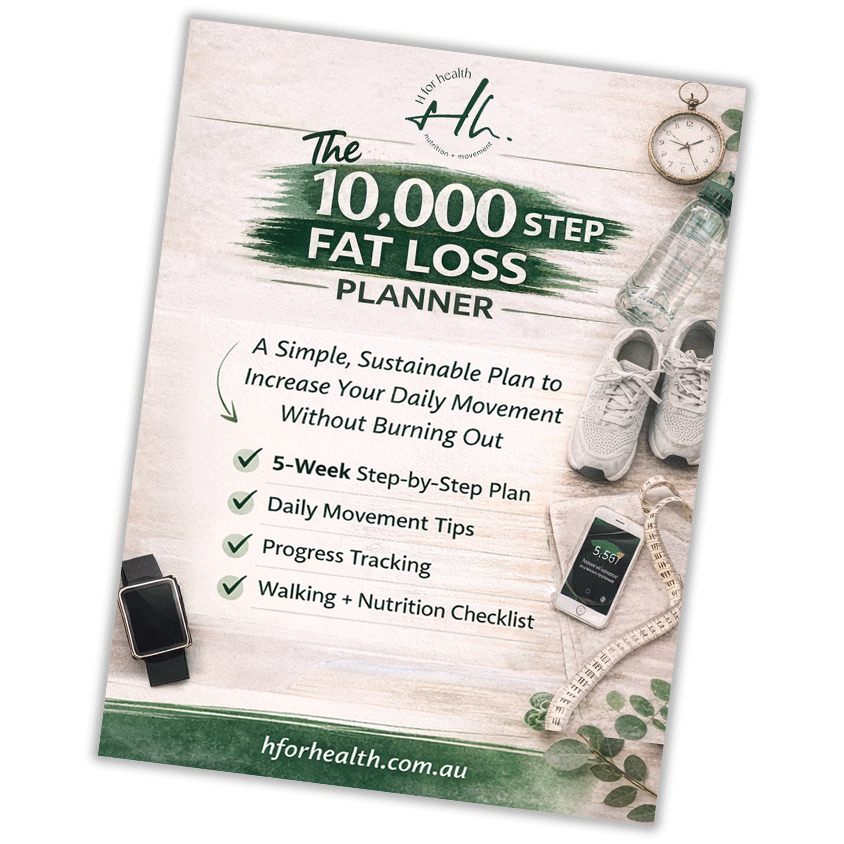
Download the Free 10,000 Step Fat Loss Planner
If you’d like a practical starting point, grab the free 5-week planner and build your step count sustainably.
It includes:
A progressive 4,000 → 10,000 step plan
Weekly tracking sheets
NEAT boosters
A walking + nutrition checklist
Want Personalised Support?
If you’re ready to improve body composition without extreme dieting, take a look at how I help women like you everyday: